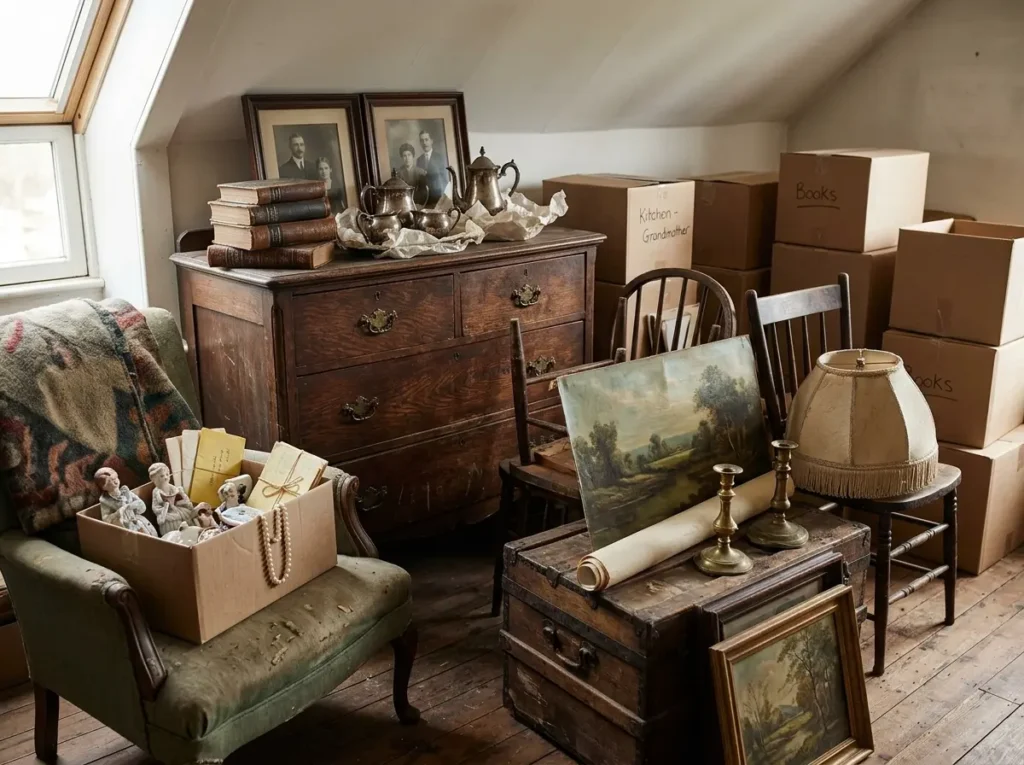
Your grandmother’s china cabinet sat untouched for months after she passed, and now you’re staring at drawers full of old jewelry, silverware, and furniture with no idea what any of it is worth. Selling inherited items feels confusing when you don’t know if that vase is worth twenty dollars or two thousand. Rush the process, and you might sell a real antique for pennies. Wait too long, and storage costs pile up while pieces sit gathering dust.
So how do you sell inherited antiques and estate items without leaving money on the table? This guide explains your options, from antique buyers to auction houses, so you can make a smart choice.
What Counts as an Antique or Estate Item?
An antique usually means an item that’s at least 100 years old, though dealers sometimes use 80 years as a looser cutoff for furniture and certain collectibles. Estate items cover more ground. They include anything left behind after someone passes away or downsizes, whether it’s old or new, rare or ordinary. Knowing the difference matters, since it changes who you should call first. Items that often fall into these categories include:
- Furniture made before 1920, like Victorian dressers or Art Deco tables
- Fine jewelry, including Victorian mourning pieces and mid-century gold pieces
- Silverware, tea sets, and sterling flatware
- Fine china, porcelain figurines, and pottery
- Artwork, prints, and framed photographs
- Coins and stamps
- Militaria, medals, and wartime memorabilia
- Clocks, pocket watches, and mechanical items
Read More: What Happens When You Bring Items to an Antique Buyer?
Different Ways to Sell Inherited Antiques and Estate Items
Selling methods don’t all work the same way, and picking the wrong one can cost you thousands of dollars or months of your time. Some options move fast but pay less. Others take longer, yet reach buyers willing to pay full value for a rare piece. Knowing the tradeoffs ahead of time helps you avoid regret later, especially if you’re handling a full estate under a deadline. Each method fits different situations, from a single valuable ring to an entire house full of belongings. Below is what you need to know about each one:
Auction Houses
Auction houses work best for rare, high-value pieces with a strong documented history, since they rely on competitive bidding to drive up prices. You’ll typically wait 60 to 90 days for an item to sell, and the house takes a seller’s commission that often runs between 15 and 25 percent. Reputable houses research provenance and check comparable sales before setting a reserve price, which protects you from selling too low. This route makes sense for museum-quality furniture, fine art, or jewelry with a known maker’s mark.
Antique Buyers
Antique buyers purchase items directly and pay cash on the spot, which makes this option ideal when you need money quickly or you’re clearing a home before closing. A knowledgeable buyer checks maker’s marks, hardware, and construction details, then gives you a fair offer within minutes. Unlike auction houses, there’s no waiting period and no commission taken from your payout. Established antique buyers also handle bulk estate purchases, so you can sell dozens of items in one visit instead of listing each one alone.
Online Marketplaces
Selling through sites like eBay or Etsy puts your item in front of a global pool of collectors, which works well for smaller pieces with a clear category and steady demand. You’ll need to photograph each item well, write an accurate description, and handle shipping and returns yourself. Fees usually run 10 to 15 percent between listing and final value costs. This method takes more of your time than other options, and fragile or oversized furniture often isn’t worth the shipping risk.
Estate Sale Companies
Estate sale companies run a full sale inside the home, pricing and selling everything from furniture to kitchenware over a weekend. They typically charge 35 to 50 percent commission, but they handle staging, pricing, advertising, and cleanup. This option works best when you’re clearing an entire house rather than selling a few valuable pieces, since low-value items get sold alongside the rare finds. Most companies also bring in a specialist to price genuine antiques correctly before the sale opens.
Private Collectors
Selling directly to a private collector can bring the highest price for a specific item, since collectors often pay a premium for pieces that fill a gap in their collection. Finding the right buyer takes work, though, through collector forums, specialty clubs, or referrals from appraisers. This route suits niche items like military medals, vintage watches, or a specific pottery maker, where a general buyer may not know the true demand. Expect a longer search than with other selling methods.
Which Selling Method Gets You the Best Price?
The best price depends on how rare the item is, how much time you have, and how badly you need cash right now. A one-of-a-kind painting might do best at auction, but most household estates mix ordinary pieces with a few valuable ones, and sorting that out yourself wastes time and risks costly mistakes. For most people clearing an estate, working with an experienced antique buyer offers the strongest combination of fair pricing, fast payment, and no fees eating into the total. Let’s compare the most common selling options:
| Method | Speed | Fees | Best For |
| Antique Buyers | Same day | None | Fast cash, whole estates |
| Auction Houses | 60-90 days | 15-25% | Rare, high-value pieces |
| Online Marketplaces | Weeks to months | 10-15% | Small, easy-to-ship items |
| Estate Sale Companies | 1-2 weeks | 35-50% | Clearing an entire home |
| Private Collectors | Weeks to months | None, but time-heavy | Niche, specialized items |
What Should You Do Before Selling Inherited Antiques?
What you do in the weeks before selling can raise or lower your final payout more than the selling method itself. Rushing through a house and selling everything to the first buyer often means missing a valuable piece hiding among ordinary items. A little preparation protects you from underselling and gives you leverage when negotiating with any buyer. Start with these five steps before you sell:
Separate Valuable Items From Everyday Household Goods
Walk through the home and set aside anything that looks old, handmade, or made from silver, gold, or fine wood before touching the rest. Check drawers, closets, and attics, since jewelry and coins often get tucked away and forgotten. Everyday goods like modern furniture or kitchen appliances belong in a separate pile, so mixing them in doesn’t hide what’s actually worth selling separately.
Avoid Cleaning or Repairing Antiques Yourself
Scrubbing tarnish off silver or refinishing an old table can strip away the patina that collectors actually pay for, cutting the value by half or more in some cases. Even well-meaning repairs done with modern glue or hardware can make a piece look altered, which lowers buyer trust. Leave restoration decisions to the buyer or an appraiser who knows what’s original and what should stay untouched.
Gather Any Available History or Documentation
Old receipts, letters, family photos showing the item in use, or past appraisals all help establish provenance, which can raise the price a buyer is willing to pay. Even a maker’s mark or a signature you can point to gives a buyer more assurance about the piece. Without documentation, buyers often price conservatively simply because they can’t confirm the item’s background.
Take Clear Photos and Create a Basic Inventory
Photograph each item from multiple angles in good lighting, including any marks, signatures, or damage you notice. Then, document your antiques to make it easier to compare offers later and track what’s been sold. This step also helps if you’re splitting an estate among siblings, since everyone can see exactly what’s included.
Compare Offers Before Making a Final Decision
Get at least two or three offers before selling anything valuable, since prices between buyers can vary widely depending on their specialty and current inventory needs. A buyer who already has three similar clocks may offer less than one actively looking for that exact piece. Comparing offers also helps you spot a lowball number before you accept it.
Do You Need an Appraisal Before You Sell?
An appraisal isn’t necessary for every item, but it’s worth the cost for anything you suspect is rare, signed, or made from precious metal. A certified appraiser can identify makers, confirm authenticity, and give you a realistic value range backed by recent sales data instead of a rough guess based on looks alone. For a house full of ordinary estate items, skip the appraisal and let an experienced buyer evaluate everything during a walkthrough instead.
Also Read: How Antique Dealers Evaluate Furniture, Art, and Collectibles?
Mistakes That Can Lower the Value of Your Estate Items
Small missteps early on can quietly cut hundreds or thousands off your final sale price, and most people don’t notice the damage until a buyer points it out. Many of these mistakes happen simply because families want to get through the process quickly after a loss. Watch out for these common errors:
- Selling items as a group instead of pricing valuable pieces separately
- Storing silver or metal items in damp basements or attics, which causes corrosion
- Throwing away original boxes, tags, or paperwork that came with the item
- Accepting the first offer without checking what similar items have sold for
- Removing or altering hardware, hinges, or fabric on antique furniture
- Letting items sit in direct sunlight, which fades wood finishes and fabric
Sell Your Inherited Antiques for What They’re Really Worth
At Antiques & Collectibles Buyers, we’ve spent our careers evaluating estates and know how to spot value that other buyers miss. We pay cash on the spot, handle single pieces or entire households, and never take a commission out of your payout. Our team checks construction, maker’s marks, and condition before making an offer, so you get a number based on real expertise rather than a quick guess. Ready to find out what your inherited items are worth? Contact us and get a straightforward offer today.