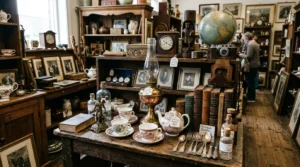
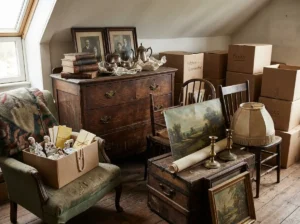
When a house is packed with old furniture, dishes, jewelry, and other belongings, it can be hard for families to decide what to do. You might need to clear out a home after someone has passed away, or you might simply want to let go of things collected over time. The main choices are to hold an estate sale or sell directly to an antique buyer. Both options help you turn unwanted items into cash, but they work differently.
Choosing the wrong option can cost you time, effort, and money. Some people start an estate sale without knowing how much work is involved. Others sell to the first antique buyer they meet and later realize they let valuable items go for too little. This guide will help you understand both choices so you can make a confident decision.
What Is an Estate Sale?
An estate sale is a public event at which most or all of a home’s contents are sold. This usually happens when someone moves, downsizes, or passes away. The goal is to sell as much as possible over a weekend or two, with shoppers coming through the house to look around.
The company running the sale sets prices, advertises, and manages everything on the sale days. Afterward, any unsold items may be donated, discarded, or sold in bulk. The family receives the money left after the company takes its fee, which is usually 30 to 50 percent of total sales. Some companies also charge extra for setup and advertising, which can further reduce your final payment.
What Does an Antique Buyer Do?
An antique buyer purchases older items directly from you. Instead of waiting for a crowd, you get a cash offer right away. These buyers look for items with age, quality, or collectible value, such as vintage furniture, sterling silver, old toys, artwork, and fine jewelry. Experienced antique dealers also know the market for rare coins, military items, and vintage watches, so they do not overlook anything valuable.
Most antique buyers have years of experience judging the value of items based on demand and condition. They handle all the heavy lifting and remove the items from your home right away. You do not have to spend time tagging, setting up, or waiting for buyers. You get paid in one lump sum at the time of the sale.
Also Read: 5 Signs of a Trustworthy Antique Buyer
Estate Sale vs Antique Buyer: A Quick Comparison
- Time commitment: An estate sale takes weeks to plan, execute, and wrap up. Selling to an antique buyer can be completed in a day or two.
- Pricing control: In an estate sale, you set prices with help, but haggling is common. With an antique buyer, you negotiate a single price for selected pieces or entire collections.
- Fees and costs: Estate sale companies take a cut of the proceeds. Antique buyers pay you directly, with no percentage deducted.
- Items sold: Estate sales try to sell everything. An antique buyer focuses on high-quality pieces that hold value.
- Privacy: An estate sale opens your home to strangers. An antique buyer visits by appointment, often accompanied by just one or two people.
- Speed of payment: Estate-sale proceeds can take a week or two to settle. An antique buyer pays right away.
The Actual Costs of an Estate Sale
At first, an estate sale might seem like the best way to get the most money because many buyers compete for your items. However, there are often hidden costs that surprise families. For example, if your sale brings in 5,000 and the fee is 40 percent, you only keep 3,000. You also spend weeks cleaning, organizing, and setting up the house like a store. If something breaks, you have to cover the loss. You might also need to pay for advertising. After the sale, you still have to deal with anything that did not sell, which could mean trips to a donation center or hiring a junk removal service.
The emotional side is important too. Allowing crowds of strangers into a loved one’s home can be stressful, and sometimes small, valuable items go missing. If you have a few high-end pieces mixed with everyday household goods, a sale might not reflect the true value of those special items.
The Actual Costs of Selling to an Antique Buyer
Selling to an antique buyer has its own trade-offs. You will likely get less than the retail price because the buyer needs to make a profit when they resell your items. However, you avoid all the fees, cleanup, and waiting that come with an estate sale. There are no crowds, no need to set up, and no mess left behind. You also do not have to worry about items not selling. For people who want a quick and simple process, this option often feels worth it.
Another advantage is that antique buyers usually accept items as they are. With an estate sale, you might need to clean, polish, or repair items to get a better price. An antique buyer knows how to handle items that need work and factors that into their offer, saving you time and money.
When to Choose an Estate Sale
An estate sale is a good choice if you have a house full of average or decent items and want to clear everything out. If your home has a mix of everyday goods, furniture, and some collectibles, letting the public in often helps you sell the most. It also works if you are not in a hurry and are comfortable with strangers looking through your things. Estate sales can be a better option if local antique dealers and collectors often attend sales in your area, since competition can raise prices on special items.
- You are comfortable with a timeline of three to six weeks.
- The home contains hundreds of items that need to go.
- You can handle the physical work of cleaning and staging.
- You are okay with strangers walking through the house.
- You accept that the payout will take time and that fees will be deducted.
Also Read: Antique vs Collectible: What’s the Difference?
When Selling to an Antique Buyer Makes More Sense
An antique buyer is often the best choice when you want to get things done quickly and easily. If you have inherited a few valuable items but do not want to deal with the rest of the house, an antique buyer can select the best pieces. This is also a good option for large or hard-to-move items, such as heavy cabinets or a vintage piano. Antique buyers usually bring their own team and truck, and they know how to safely pack delicate items like chandeliers or stained glass.
Many families choose antique buyers when they live far from the property and cannot run a sale themselves. Traveling back and forth to organize a sale can be expensive, so having a local antique buyer who can make a cash offer right away can take a lot of stress off your shoulders.
- You need cash quickly and do not want to wait.
- The items are few but possibly valuable, such as sterling silver, gold jewelry, or a rare painting.
- You do not want the stress of strangers roaming the house.
- The property has little time left before it must be empty.
- You want a one-and-done transaction with no leftover mess.
Cash for Your Antiques Without the Hassle
At Antiques Buyers Tristate, we make it simple to turn your older items into cash. Instead of spending weeks on an estate sale, you can call us for an evaluation. Our buyers come to your home the same day, review your pieces, and offer you a fair cash offer with no pressure. We serve the entire tristate area and handle all the lifting, packing, and moving.